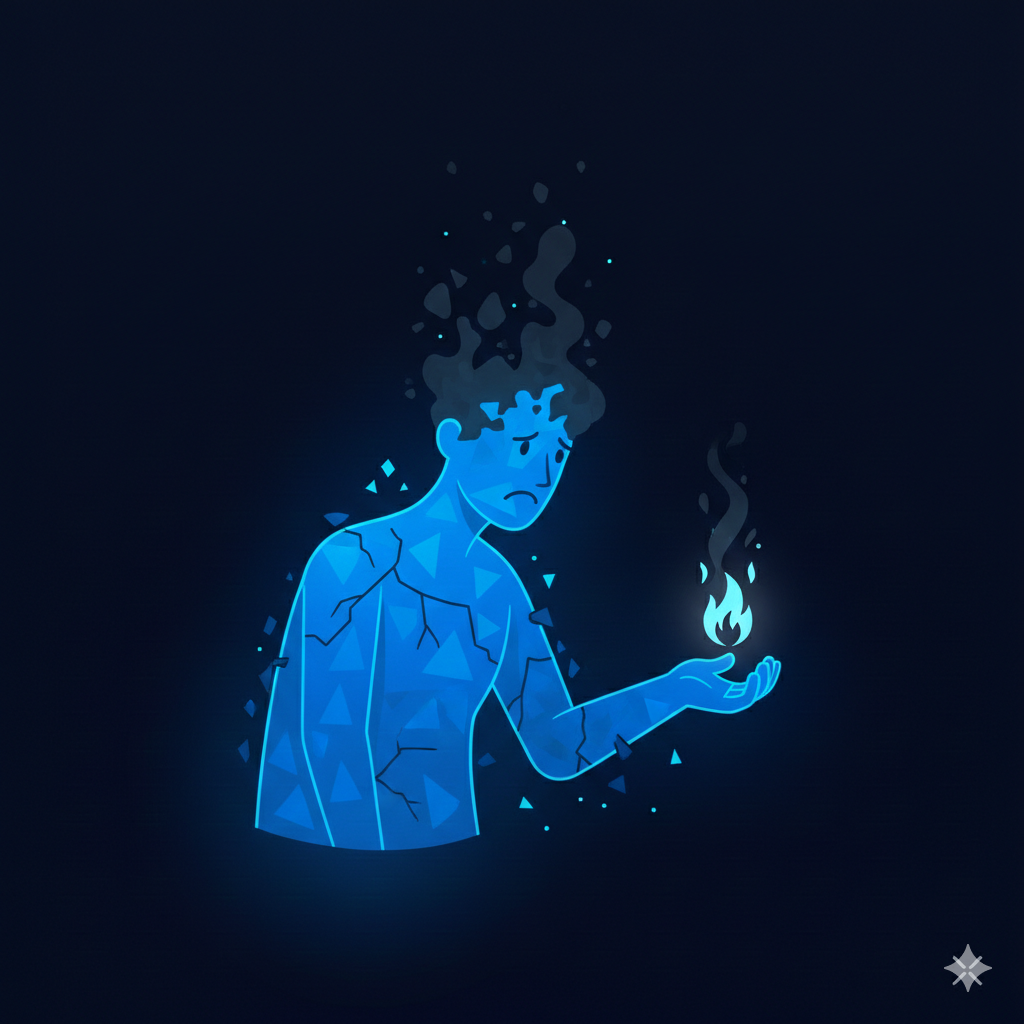
There is tired, and then there is burnout. Tired is when you stay up late studying and need extra sleep. Burnout is when you have slept for twelve hours and still cannot find the energy to care about anything. It is when the alarm goes off and the thought of facing another day at school fills you with dread.
More and more Ethiopian students are experiencing this second kind of exhaustion. Academic pressure, family expectations, uncertain futures, and a culture that rarely acknowledges the need for mental rest have created a perfect storm. And it is time we talked about why.
What Burnout Actually Feels Like
Burnout is not just physical tiredness. It is a deep, pervasive exhaustion that affects every dimension of your life. The World Health Organization recognizes burnout as an occupational phenomenon, and while students are not formally employed, the demands placed on them are no less intense.
- Emotional exhaustion: Feeling completely drained, like you have nothing left to give. Even small interactions feel like they require enormous effort. You may find yourself crying for no obvious reason or feeling numb.
- Detachment and cynicism: Becoming indifferent about things you used to care about deeply. School, friendships, hobbies — everything starts to feel pointless or hollow.
- Reduced performance: Struggling to concentrate, forgetting things you used to know, making mistakes you would not normally make. Your grades may slip despite studying more, not less.
- Physical symptoms: Persistent headaches, stomach problems, muscle tension, getting sick more often. Your body is telling you something your mind refuses to acknowledge.
- Loss of meaning: The most frightening symptom. Wondering what the point of everything is. Why study? Why try? Why bother?
- Sleep disturbances: Either unable to sleep despite exhaustion, or sleeping excessively but never feeling rested. The quality of rest deteriorates even when you get more hours.
Burnout vs. Depression
Burnout and depression share many symptoms but are not the same thing. Burnout is typically tied to specific stressors (school, work) and improves when those stressors are addressed. Depression is more pervasive and does not necessarily improve with a change of circumstances. If your symptoms persist even during breaks, please consider reaching out to a mental health professional.
Why Ethiopian Students Burn Out
Ethiopian students face a unique combination of pressures that make burnout particularly common and particularly invisible:
- Intense academic competition: The national exam system creates enormous pressure. University placement depends on a single set of scores, making every test feel like a life-or-death moment.
- Family expectations: In Ethiopian culture, education is deeply valued — often seen as the primary path to a better life. This creates immense pressure to perform, and students may feel they are carrying not just their own future but their family's hopes.
- Resource limitations: Studying without adequate materials, in crowded classrooms, sometimes without reliable electricity or internet, adds an invisible layer of stress that students in other contexts do not face.
- Cultural silence around mental health: There is no culturally accepted framework for saying “I need a break.” Rest is often seen as laziness. Mental health days do not exist. The message is always: push harder.
- Economic anxiety: Many students are acutely aware of their family's financial situation. The cost of education, the need to succeed to justify that cost — these are burdens that many young shoulders carry.
“I thought if I just worked harder, the exhaustion would go away. Instead, I crashed. My body literally gave out during exam week. I could not get out of bed, could not hold a pen, could not think straight. That is when I realized: burnout is not about effort. It is about limits.”
The Hidden Cost of “Pushing Through”
In Ethiopian culture, we admire persistence. We celebrate those who work through the pain. And there is genuine wisdom in resilience — it has carried our communities through tremendous hardships.
But there is a difference between resilience and self-destruction. When “pushing through” means ignoring every signal your body and mind are sending you, when it means sacrificing sleep, relationships, joy, and health for the sake of one more hour of studying, we have crossed a line.
The hidden costs of chronic burnout include:
- Weakened immune system and more frequent illness
- Damaged relationships with friends and family
- Reduced ability to learn and retain information (ironically, the opposite of what pushing through is supposed to achieve)
- Increased risk of anxiety and depression
- Loss of passion for subjects you once loved
- Physical conditions including chronic headaches, digestive issues, and cardiovascular strain
Recovery Is Possible
The good news is that burnout is not permanent. With the right support and changes, you can recover. But it requires more than just taking a weekend off. It requires examining the patterns and pressures that led to burnout in the first place.
Practical Recovery Steps
- Acknowledge what is happening. Name it. Say to yourself: “I am burned out. This is real. I am not lazy or weak.” This acknowledgment is the foundation of recovery.
- Set boundaries. Learn to say no. This might mean declining extra tutoring, stepping back from an activity, or telling a parent that you need a study-free evening.
- Take real breaks. Not scrolling on your phone between study sessions. Real breaks: walking outside, talking to a friend, listening to music, doing something that genuinely recharges you.
- Talk to someone. A friend, a family member, a teacher, a peer counselor. Breaking the silence around your exhaustion is powerful. You do not have to carry this alone.
- Reconnect with joy. What did you enjoy before the exhaustion took over? Was it football, drawing, cooking, music? Give yourself permission to do something purely for pleasure.
- Improve sleep hygiene. Create a consistent sleep schedule. Avoid screens before bed. Make your sleep environment as comfortable as possible. Quality sleep is medicine.
- Challenge perfectionism. “Good enough” is often truly good enough. Not every assignment needs to be perfect. Not every exam needs a top score.
Quick Self-Check
Ask yourself: When was the last time I did something just because I enjoyed it? If you cannot remember, that is a sign you may be approaching burnout. Joy is not a luxury — it is a necessity.
A Note to Parents and Teachers
If you are a parent or teacher reading this: please understand that student burnout is not about a lack of motivation. It is often the opposite — students who burn out are frequently the most driven, the most conscientious, the ones who care the most.
The most helpful thing you can do is create space for rest without judgment. Ask your students how they are really doing. Listen to the answer. Normalize the idea that breaks are not weakness but strategy.
You Are Not a Machine
If you are experiencing burnout, please know this: you are not lazy. You are not weak. You are not failing. You are a human being who has been pushed too hard for too long. And you deserve rest.
Your worth is not measured by your exam scores. Your value as a person does not increase or decrease based on your GPA. You matter because you exist — not because of what you produce.
Recovery starts with one small step. Maybe today, that step is simply reading this article and recognizing yourself in these words. That counts. That matters.
“The day I gave myself permission to rest without guilt was the day I started getting better. It was not easy. Everything in my culture told me to keep going. But my body and mind were begging me to stop. I am glad I listened.”
If you are experiencing burnout and need someone to talk to, reach out to ROVI. We understand because we have been there too.


Comments