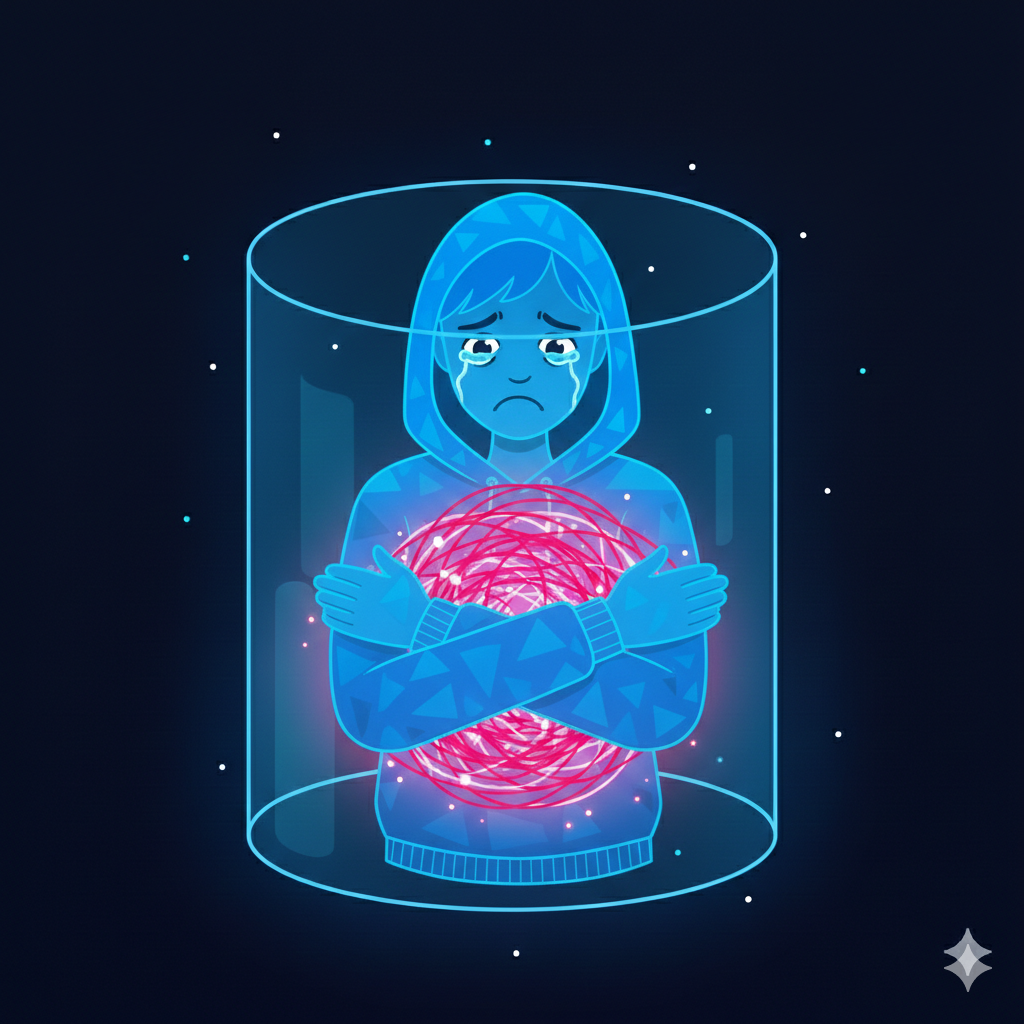
Ask any Ethiopian student how they are doing and you will almost certainly hear the same answer: “Fine.” It is an automatic reflex, a social script we learn before we understand what anxiety even means. We say “fine” when we are exhausted, panicked, falling apart, and genuinely terrified of the future — because the alternative feels impossible.
Why? Why do generation after generation of Ethiopian students continue to hide their anxiety behind polished smiles and perfect attendance records? The answer is not simple, but it is important.
The Five Walls of Silence
Through conversations with dozens of students across six schools in Addis Ababa, we have identified five primary barriers that keep Ethiopian students from expressing their anxiety.
Wall 1: Cultural Conditioning
From a young age, Ethiopian children receive consistent messages about emotional expression. Boys hear “men do not cry.” Girls hear “be strong for your family.” Both genders learn that emotional vulnerability is a private matter at best, and a character flaw at worst.
This conditioning is not malicious. It comes from a place of love — parents who survived their own hardships by being stoic, passing down the only coping mechanism they know. But what was survival for one generation becomes a prison for the next.
Wall 2: Fear of Being a Burden
Most Ethiopian students are acutely aware of their parents’ sacrifices. They know how hard their families work to provide education, food, and stability. Against this backdrop of sacrifice, expressing personal distress feels selfish.
“My mother works from 6 a.m. to 9 p.m. so I can attend school. How can I tell her I am anxious about an exam she is breaking her back to pay for? It feels like the most ungrateful thing I could do.”
Wall 3: Lack of Language
In Amharic, there is no perfect equivalent for “anxiety disorder” or “clinical depression.” The vocabulary gap matters enormously. When you do not have words for what you are experiencing, you cannot articulate it. When you cannot articulate it, you cannot ask for help. And when you cannot ask for help, you suffer alone.
Wall 4: Fear of Consequences
Students fear real consequences for revealing their mental health struggles:
- Social rejection — being labelled as “crazy” or “weak” by classmates
- Academic consequences — teachers treating them differently or questioning their capability
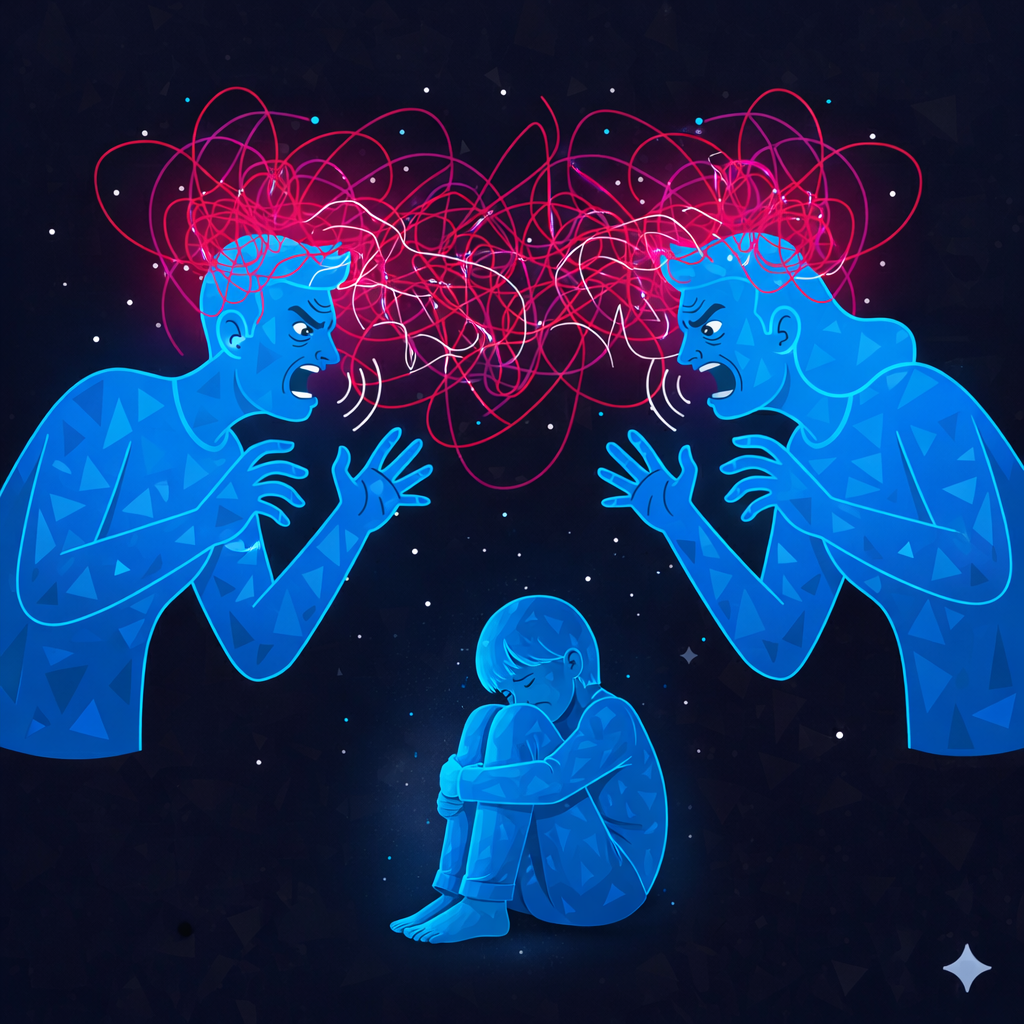
- Family shame — parents feeling blamed or embarrassed
- Spiritual judgment — being told their faith is insufficient
These fears are not irrational. They are based on real experiences that students have witnessed or heard about.
Wall 5: Normalisation of Suffering
Perhaps the most insidious barrier is the widespread belief that suffering is simply part of life and does not warrant special attention. When anxiety is normalised as “just stress” or “something everyone goes through,” students learn to endure rather than address it.
The Normalisation Trap
Yes, some stress is normal. But there is a critical difference between temporary stress before an exam and chronic anxiety that persists for weeks or months, disrupts sleep, damages relationships, and makes daily life feel unbearable. The former is part of life. The latter is a health condition that deserves care.
What Hiding Costs Us
Hiding anxiety does not make it go away. It makes it worse. When students mask their struggles, several destructive cycles begin:
- The anxiety feeds on secrecy. Hidden problems grow in the dark. The energy spent concealing anxiety leaves less energy for managing it.
- Isolation intensifies. The gap between the face you show the world and how you actually feel becomes a chasm. You feel increasingly alone, even in crowded rooms.
- Coping mechanisms deteriorate. Without healthy outlets, students turn to avoidance, procrastination, excessive sleep, or in some cases substance use and self-harm.
- The body pays the price. Chronic anxiety manifests physically: headaches, digestive issues, muscle tension, immune system suppression.
- Opportunities are lost. Students who could thrive in their studies, friendships, and aspirations are held back by untreated anxiety.
Breaking Down the Walls
We cannot dismantle these barriers overnight. But here is where we start:
- Create new language. Talk about mental health openly, even when the words feel unfamiliar. Every conversation that normalises discussion chips away at silence.
- Model vulnerability. When trusted leaders — teachers, older students, community figures — share their own struggles, it gives younger students permission to do the same.
- Build peer support. Students often find it easier to talk to another student than to an adult. ROVI’s peer counselor model works because it lowers the barriers to connection.
- Educate parents. Not confrontationally, but compassionately. Help families understand that acknowledging anxiety is not complaining — it is seeking health.
- Start small. You do not need to announce your anxiety to the world. Start with one person. One honest answer to “How are you?”
“The first time I answered honestly — really honestly — when someone asked how I was, I expected rejection. Instead, they said ‘Me too.’ Those two words changed my life.”
Every student who decides to be honest about their anxiety makes it easier for the next student to do the same. That is how movements begin. Not with grand gestures, but with one brave, quiet truth.
If you are hiding your anxiety right now, know that you do not have to do this alone. Reach out to ROVI — we are students who understand.

Comments